

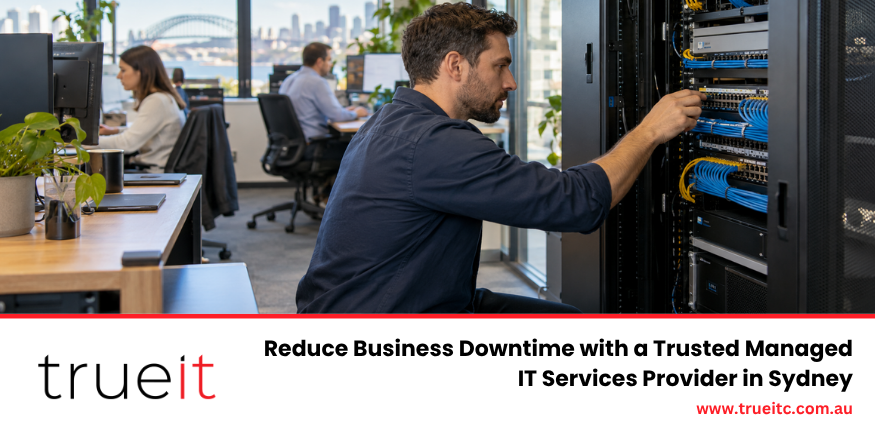
Technology plays a vital role in keeping modern businesses productive, connected, and competitive. From communication and collaboration to financial management and customer service, organisations rely on dependable IT systems to support daily operations.
However, unexpected technical failures can disrupt workflows, reduce employee productivity, delay customer service, impact revenue, and damage business reputation. As organisations increasingly adopt cloud technologies, hybrid work models, and digital business processes, maintaining reliable IT infrastructure has become essential.
Partnering with a managed IT services provider in Sydney gives businesses access to expert support, continuous monitoring, cybersecurity protection, cloud management, and strategic IT guidance.
With ongoing maintenance and proactive IT management, organisations can minimise operational risks, improve system reliability, strengthen security, and ensure technology supports long-term growth.
TrueIT delivers comprehensive managed IT, cloud, cybersecurity, Microsoft 365, AWS, business continuity, disaster recovery, and change management solutions tailored to evolving business needs.

The Real Cost of Business Downtime
Business downtime affects far more than technology alone. Every minute employees cannot access business systems can result in delayed projects, reduced productivity, interrupted customer service, and lost business opportunities.
Common impacts include:
- Reduced employee productivity
- Missed customer enquiries and sales
- Delayed project delivery
- Loss of important business data
- Higher recovery expenses
- Damage to customer confidence
Many businesses underestimate the true cost of downtime until a major incident occurs. Recovering from hardware failures, cyberattacks, software issues, or network outages often requires significant time and resources that could have been avoided through preventative maintenance.
This is why many organisations are choosing outsourced IT services in Sydney to improve system reliability while reducing operational risks.
Common Causes of IT Downtime
Downtime usually results from multiple technology issues rather than a single failure. Identifying these risks early helps businesses maintain reliable operations.
Hardware Failures
Servers, networking equipment, storage devices, and workstations naturally age over time. Without regular monitoring and lifecycle planning, unexpected hardware failures can interrupt business operations.
Routine maintenance helps identify ageing equipment before it causes costly downtime.
Cybersecurity Incidents
Cyber threats such as ransomware, malware, phishing attacks, and unauthorised access continue to target businesses of every size.
Strong cybersecurity measures, regular updates, and continuous monitoring reduce these risks while improving overall business resilience.
Network Problems
Reliable connectivity is essential for cloud applications, communication platforms, and daily business operations.
Network bottlenecks, firewall issues, or infrastructure failures can quickly reduce productivity. Professional network support services in Sydney help maintain secure, stable, and high-performing networks.
Software Compatibility Issues
As businesses adopt new software and cloud platforms, outdated systems or poorly managed upgrades can create compatibility issues.
Regular maintenance and updates help ensure applications remain secure, compatible, and efficient.
Human Error
Accidental file deletion, incorrect system configuration, and phishing scams remain common causes of IT disruption.
Employee awareness training and controlled access policies significantly reduce these risks.
Why Businesses Are Moving Towards Managed IT Services
Traditional break-fix IT support focuses on resolving issues only after they occur. While this approach may seem economical initially, recurring downtime and emergency repairs often increase long-term costs.
Businesses today need technology that performs consistently every day.
Working with a trusted managed IT services provider in Sydney allows organisations to move from reactive support to continuous optimisation. Through ongoing monitoring, preventative maintenance, and strategic planning, many potential issues are identified and resolved before they affect employees.
This approach provides:
- Predictable IT costs
- Scalable support
- Reduced downtime
- Access to specialist expertise
- Better technology planning
As a result, internal teams can focus on business growth instead of troubleshooting technology.
The Advantages of Proactive IT Management
Preventative IT support provides long-term business value beyond resolving technical issues.
Continuous System Monitoring
Continuous monitoring allows IT specialists to detect unusual activity, declining performance, or potential hardware failures before they interrupt operations.
This level of proactive IT management significantly reduces unexpected downtime while improving system reliability.
Regular Maintenance and Updates
Routine maintenance keeps business technology secure and efficient through:
- Software updates
- Security patching
- Hardware health checks
- Performance optimisation
- Backup verification
Regular maintenance reduces vulnerabilities while extending the lifespan of IT infrastructure.
Improved Cybersecurity Protection
Businesses handling sensitive customer and operational data require strong security measures.
Professional IT management includes:
- Threat monitoring
- Endpoint protection
- Email security
- Multi-factor authentication
- Vulnerability management
These preventative measures reduce business risks while strengthening overall security.
Faster Technical Support
Even well-maintained systems occasionally require support.
Businesses using outsourced IT services in Sydney benefit from rapid technical assistance, helping employees return to work quickly while minimising operational disruption.
Better Resource Planning
Technology should evolve alongside business growth.
Regular IT assessments help organisations:
- Plan future upgrades
- Improve infrastructure
- Optimise IT spending
- Align technology with business goals
Strategic planning reduces emergency purchases while supporting long-term efficiency.
How Outsourced IT Services Improve Business Efficiency
Building and maintaining an internal IT department requires significant investment in staffing, infrastructure, software, and ongoing training.
For many organisations, partnering with providers offering outsourced IT services in Sydney provides greater flexibility while reducing operational complexity.
Key benefits include:
- Access to experienced IT professionals
- Predictable monthly costs
- Reduced internal workload
- Better technology planning
- Enhanced cybersecurity expertise
- Scalable support as businesses grow
Outsourcing also provides access to specialised expertise across cloud services, Microsoft 365, AWS, cybersecurity, business continuity, and disaster recovery without needing multiple in-house specialists.
Network Support Services That Keep Businesses Connected
A reliable network is essential for business continuity and day-to-day operations. Employees depend on secure internet connectivity, cloud applications, communication platforms, and business software to perform their work efficiently. Even a minor network issue can slow productivity, interrupt customer service, and delay important tasks.
Investing in professional network support services in Sydney helps businesses maintain a secure, stable, and high-performing IT environment while reducing the risk of unexpected outages.
Comprehensive network support typically includes:
Network Monitoring
Continuous monitoring helps identify unusual activity, performance bottlenecks, and hardware issues before they develop into larger problems. Early detection allows businesses to resolve concerns quickly while maintaining consistent network performance.\
Infrastructure Optimisation
As organisations grow, their IT infrastructure must evolve. Regular upgrades to routers, switches, wireless networks, and firewall configurations ensure the network can support increasing workloads without compromising performance.
Performance Management
Slow or unreliable networks affect employee productivity and customer experience. Ongoing optimisation improves bandwidth usage, reduces latency, and supports reliable access to cloud-based applications and collaboration tools.
Secure Connectivity
Secure remote access, firewall management, VPN configuration, and network segmentation help protect business information while enabling employees to work safely from multiple locations.
By implementing dependable network support services in Sydney, organisations can improve operational efficiency while supporting future business growth.
Cloud Solutions That Support Business Continuity
Cloud technology enables businesses to operate more efficiently by providing secure access to systems, files, and applications from virtually anywhere. It also improves flexibility, supports hybrid work environments, and reduces dependence on traditional on-premises infrastructure.
Some of the key benefits include:
Improved Accessibility
Employees can securely access business applications whether they are working from the office, home, or client sites, ensuring productivity remains uninterrupted.
Scalable Infrastructure
Cloud services allow businesses to scale computing resources as requirements change, providing flexibility without investing heavily in additional hardware.
Enhanced Collaboration
Cloud platforms simplify file sharing, communication, and project collaboration by allowing teams to work together in real time regardless of location.
Greater Reliability
Modern cloud environments offer built-in redundancy and high availability, helping minimise downtime while ensuring critical business applications remain accessible.
When cloud services are supported through proactive IT management, organisations benefit from improved performance, stronger security, and ongoing optimisation.
Business Continuity and Disaster Recovery
Unexpected disruptions such as cyberattacks, hardware failures, accidental data loss, or power outages can significantly impact business operations. Having a business continuity strategy in place helps organisations recover quickly while minimising operational disruption.
A comprehensive strategy includes:
Secure Data Backups
Regular automated backups ensure business-critical information can be restored quickly if data is lost or systems become unavailable.
Disaster Recovery Planning
Clearly documented recovery procedures allow businesses to restore systems, applications, and operations efficiently following an unexpected incident.
Risk Assessment
Regular IT assessments identify vulnerabilities before they become critical issues, helping strengthen overall infrastructure.
Recovery Testing
Routine testing verifies that backup systems and recovery plans function effectively when needed.
Planning ahead enables businesses to minimise downtime, reduce financial losses, and maintain customer confidence during unexpected events.
Microsoft 365 and Cloud Productivity Solutions
Microsoft 365 has become an essential platform for communication, collaboration, and document management. To maximise its benefits, businesses require ongoing administration, security, and technical support.
Professional IT services assist with:
- Microsoft 365 deployment
- User and licence management
- Security configuration
- Data migration
- Email administration
- Collaboration platform support
Proper management improves productivity while ensuring business data remains secure and accessible.
AWS Cloud Support for Growing Businesses
As organisations expand, managing cloud infrastructure becomes increasingly important. AWS provides scalable cloud solutions, but achieving optimal performance requires specialist expertise.
Managed AWS support helps businesses:
- Optimise cloud infrastructure
- Improve resource efficiency
- Strengthen cloud security
- Monitor system performance
- Control cloud expenditure
- Support business growth
Combining AWS expertise with outsourced IT services in Sydney enables organisations to adopt cloud technologies confidently while reducing management complexity.
The Importance of Cybersecurity in Reducing Downtime
Cybersecurity remains one of the most important aspects of maintaining reliable business operations. Security breaches can result in operational disruption, financial loss, reputational damage, and data compromise.
An effective cybersecurity strategy includes:
- Continuous threat monitoring
- Endpoint protection
- Email security
- Identity and access management
- Multi-factor authentication
- Security patch management
- Employee security awareness
Combined with proactive IT management, these measures help identify vulnerabilities early while reducing the likelihood of costly security incidents.
How to Choose the Right Managed IT Partner
Selecting an IT partner is an important business decision. Beyond resolving technical issues, the right provider should support your long-term business objectives while delivering reliable technology solutions.
Consider the following factors:
Industry Experience
Choose a provider with proven experience supporting businesses across a range of industries and IT environments.
Proactive Support
Preventative maintenance, continuous monitoring, and strategic planning should be central to the provider’s approach rather than relying solely on reactive support.
Scalable Services
As your business grows, your technology requirements will change. A flexible provider should be able to adapt services to meet future demands.
Comprehensive IT Solutions
Working with a provider that offers managed IT services, cloud solutions, cybersecurity, disaster recovery, business continuity, and IT consulting simplifies technology management while improving operational efficiency.
Responsive Technical Support
Reliable communication and timely issue resolution help minimise business disruption whenever technical assistance is required.
Build a More Resilient Business with Proactive IT Support
Business downtime can impact productivity, customer satisfaction, profitability, and long-term growth.
Partnering with an experienced managed IT services provider in Sydney helps businesses move beyond reactive support through proactive IT management, stronger cybersecurity, cloud solutions, and business continuity planning.
Leveraging outsourced IT services in Sydney also provides access to expert guidance without the cost of maintaining a large internal IT team. Combined with dependable network support services in Sydney, your business can stay secure, efficient, and prepared for future growth.
Partner with TrueIT that delivers tailored IT solutions that minimise downtime, optimise performance, and provide reliable support to help your organisation operate with confidence.
Frequently Asked Questions
- Why should businesses use managed IT services instead of break-fix support?
Managed IT services focus on prevention through continuous monitoring, maintenance, and strategic planning, helping reduce downtime and improve long-term efficiency.
- How does proactive IT management minimise business disruptions?
Regular monitoring, updates, preventative maintenance, and early issue detection resolve problems before they affect daily operations.
- What do network support services typically include?
They cover network monitoring, optimisation, firewall management, secure connectivity, troubleshooting, and maintenance to ensure reliable business performance.
- How do cloud solutions support business continuity?
Cloud solutions provide secure access, reliable backups, and faster disaster recovery, helping businesses maintain operations and minimise downtime during unexpected disruptions.
